Every year on October 28th, Greece celebrates one of the most important dates in its modern history.
Known as Ohi Day, or Oxi Day, the national holiday commemorates Greece’s refusal to accept the Italian ultimatum in 1940 and the country’s entry into the Second World War.
Across Greece, the blue and white flag appears on homes, streets and public buildings, while parades and commemorative events take place throughout the country.
For Greeks, however, October 28th is more than a date on the calendar. It is a day connected with national memory, resilience and the generations that lived through one of the most difficult periods in modern Greek history.
Why Is October 28th Celebrated in Greece?
In the early hours of October 28th, 1940, Italian ambassador Emanuele Grazzi presented Greek Prime Minister Ioannis Metaxas with an ultimatum from Benito Mussolini’s government.
The demand would effectively have allowed Axis forces to occupy strategic locations within Greece.
Metaxas rejected the ultimatum, and Greece subsequently entered the war against Italy.
The historical response was expressed in French, but it became remembered collectively by the Greek people through one simple word:
Όχι. Ohi. No.
That word eventually became the name associated with the anniversary itself.
Today, October 28th is commemorated throughout Greece with school and military parades, ceremonies, flags and events honouring those who fought during the war.
October 28th in the Greek Islands
The anniversary is not observed only in Athens or Greece’s largest cities.
Across the islands, including Mykonos, local communities participate in commemorations and parades, continuing traditions shared throughout the country.
For visitors travelling in Greece during late October, it can also be an opportunity to experience a different side of the country.
The summer crowds have largely disappeared. Life moves at a slower pace, local communities return to their everyday rhythm and the experience feels very different from the Greece most travellers see during July and August.
It is a period when the islands reveal a quieter and more authentic side of everyday Greek life.
The Greek Table and the Meaning of Coming Together
There is no official menu associated with Ohi Day.
But like many important days in Greece, October 28th often brings families and friends together.
And in Greek culture, gathering almost inevitably leads to the table.
Sharing food has always been an important part of Greek hospitality. The table is not simply where a meal is served. It is where conversations continue, stories are shared and people spend time together.
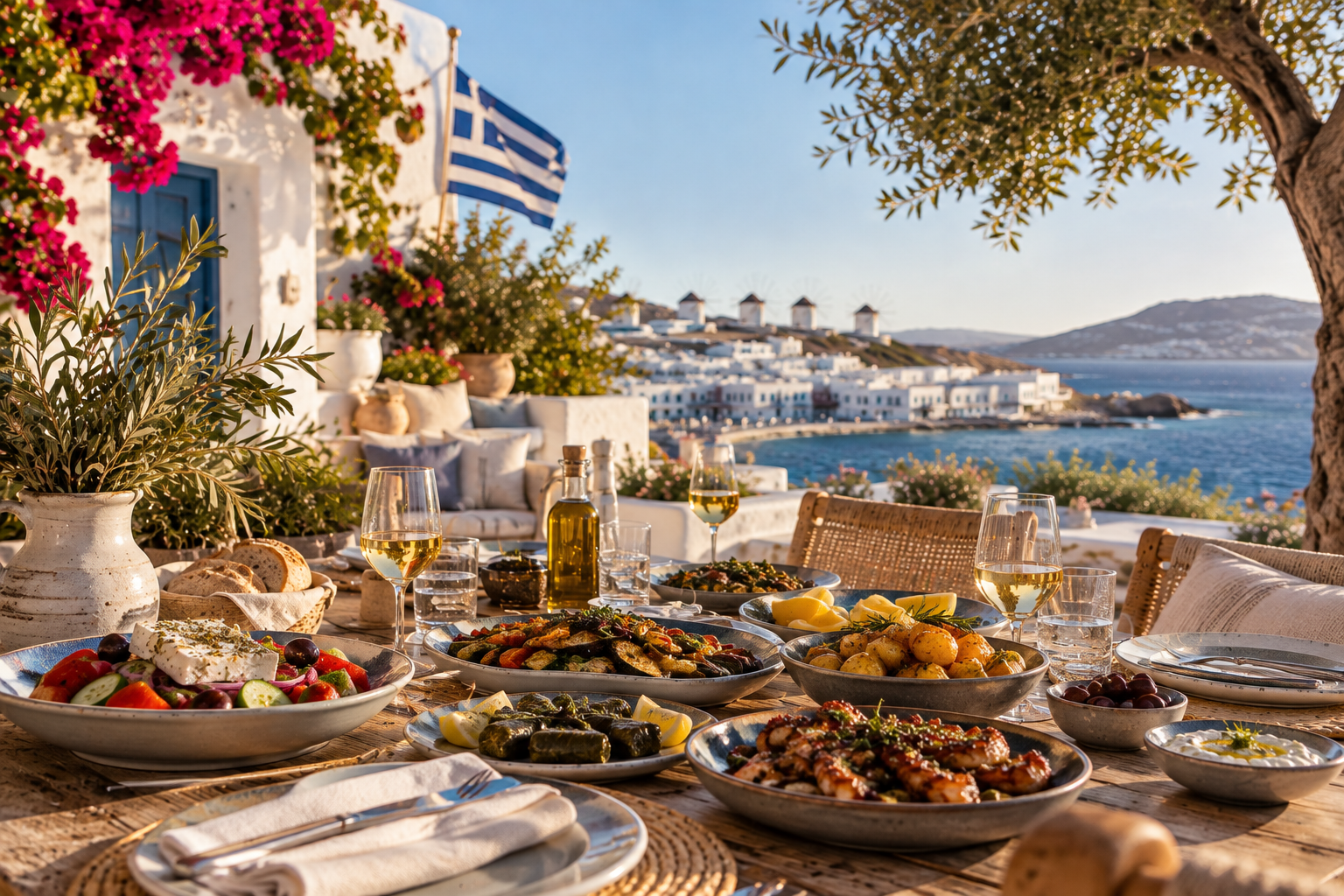
This is one reason Greek dining is traditionally built around dishes placed in the centre of the table rather than individual courses arriving in isolation.
Mezedes, salads, vegetables, cheeses, seafood, meat and bread are shared. The meal becomes a collective experience.
Autumn Flavours in Greece
Late October also marks a change in the Greek kitchen.
The intense heat of summer has passed and seasonal ingredients begin to influence what appears on the table.
Olive oil remains at the heart of Greek cooking, accompanied by vegetables, pulses, herbs, cheeses, fish and slow-cooked dishes.
The emphasis is often less on complexity and more on the quality of the ingredients.
This philosophy is central to Mediterranean cooking. Fresh ingredients, simple preparation and food designed to be shared can create a dining experience that feels generous without needing to be excessive.
Greek Hospitality Beyond the Summer Season
Mykonos is internationally known for its beaches, nightlife and summer lifestyle.
But Greek hospitality is not seasonal.
The idea of philoxenia, traditionally understood as hospitality towards a guest or stranger, is deeply connected to Greek culture.
It can be seen in something as simple as offering food, insisting that a guest stays at the table a little longer or preparing more than anyone could realistically eat.
For visitors, these small moments often become some of the strongest memories of Greece.
And they explain why food is such an important part of experiencing the country.
Bringing the Greek Table to Your Villa
For guests staying in Mykonos, a private dining experience offers another way to discover this side of Greek culture.
A dinner does not necessarily need to be formal or elaborate.
It can simply be a table overlooking the Aegean, fresh Mediterranean ingredients, dishes designed to be shared and enough time to enjoy the people around you.
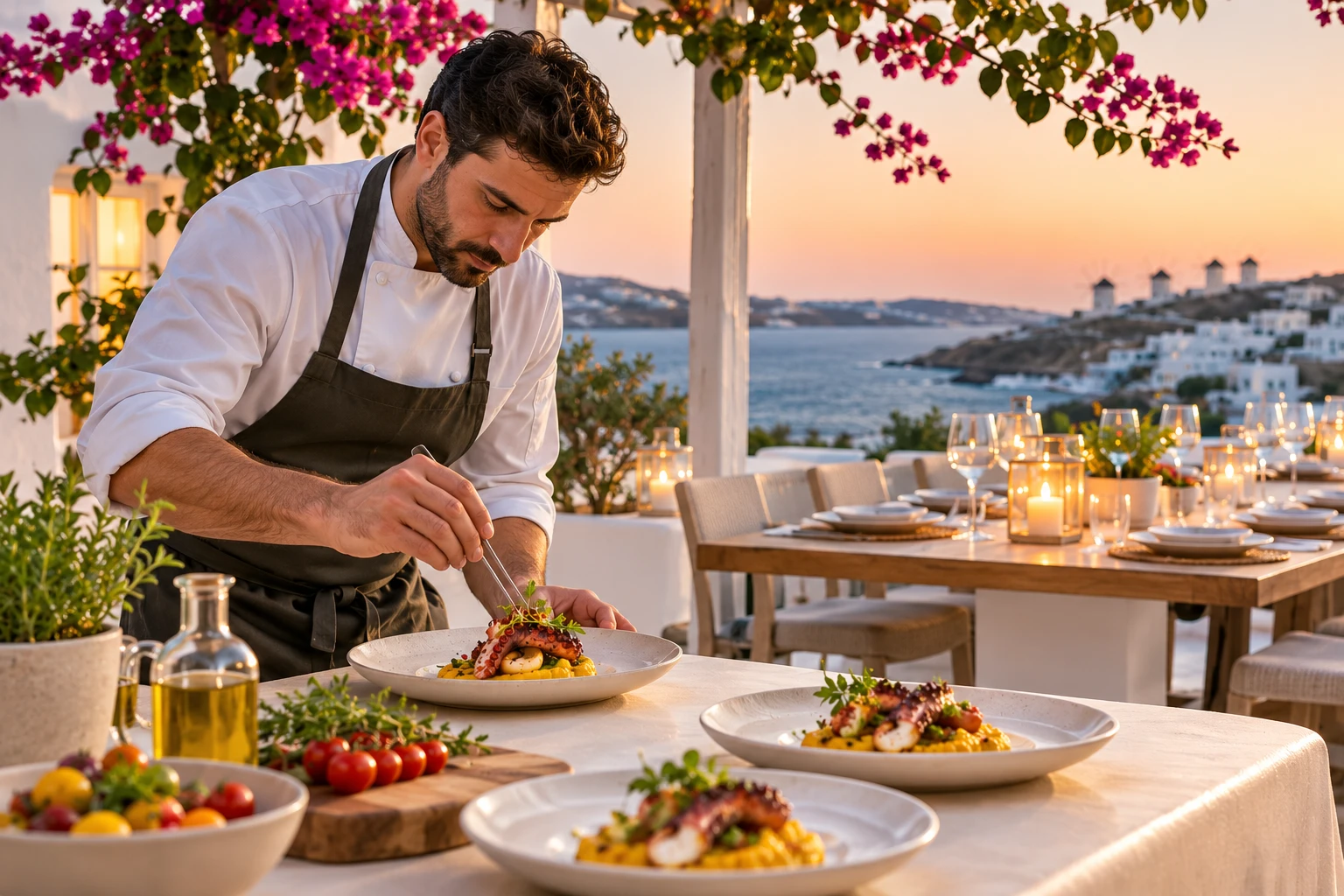
A private chef in Mykonos can create the menu around the guests, the season and the type of evening they want to experience.
For families and groups staying in a villa, this also means enjoying Greek and Mediterranean cuisine without having to leave the privacy of their own space.
A Day of Memory, Tradition and Togetherness
October 28th remains first and foremost a day of national remembrance.
It commemorates a defining moment in modern Greek history and honours the people who lived, fought and sacrificed during that period.
For those visiting Greece at this time of year, it also provides an opportunity to see the country beyond its familiar summer image.
Local communities, national traditions, autumn landscapes and the simple pleasure of people gathering around a table reveal another side of Greek life.
And perhaps that is one of the best ways to understand Greece. Not only through the places you visit, but through its history, its people and the tables you share along the way.
Private Dining in Mykonos
Experience the Greek Table in Your Villa
From relaxed Mediterranean meals to private dinners and special occasions,
let us create a dining experience around your guests, your preferences
and your time in Mykonos.